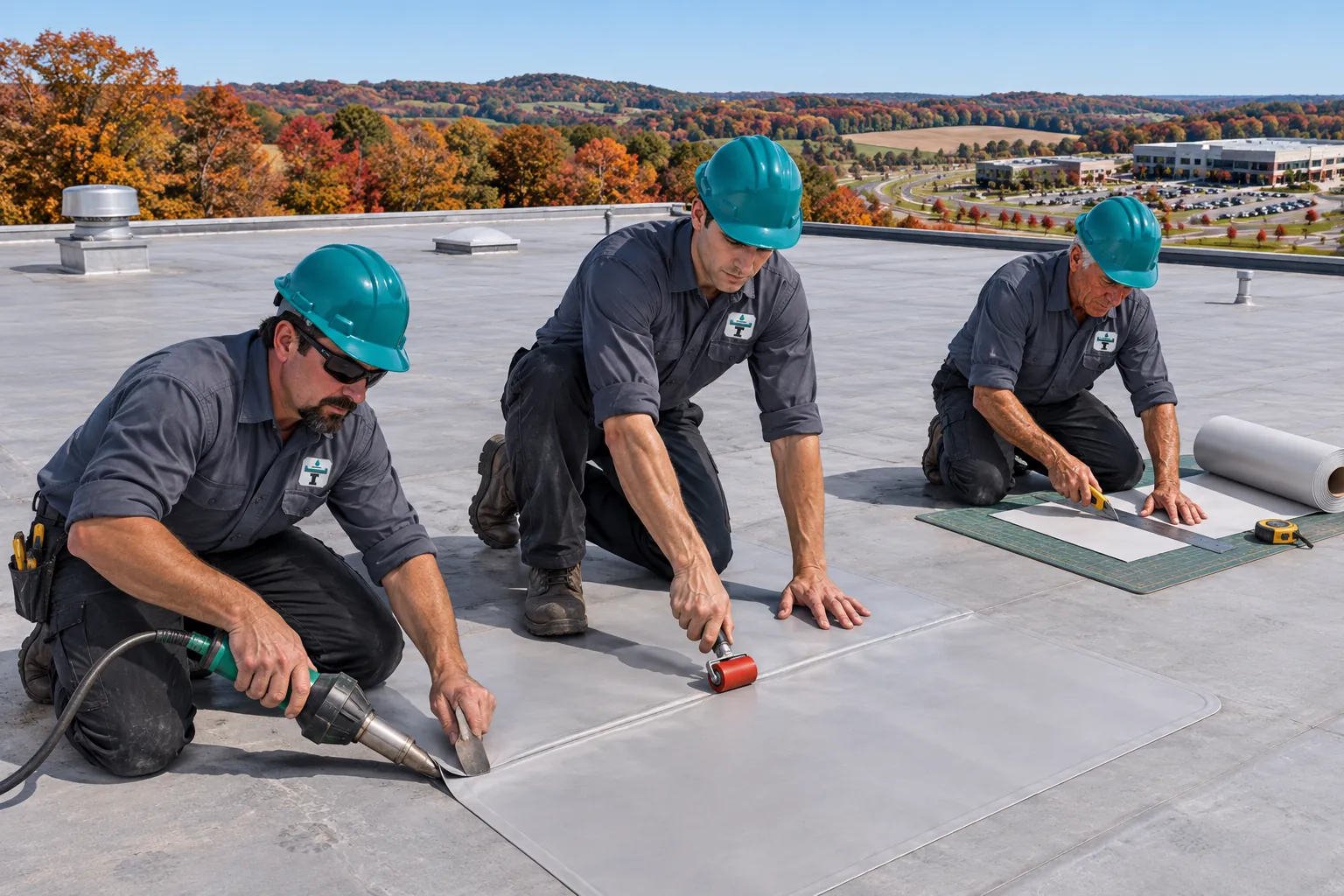
Shift-Window Repair
- Typical work
- Fasteners, a seam, or one curb
- Timing
- Fits a single shift
- Lockouts
- One fan or none
- Access
- Approved route through plant security
- Planning
- A call with maintenance

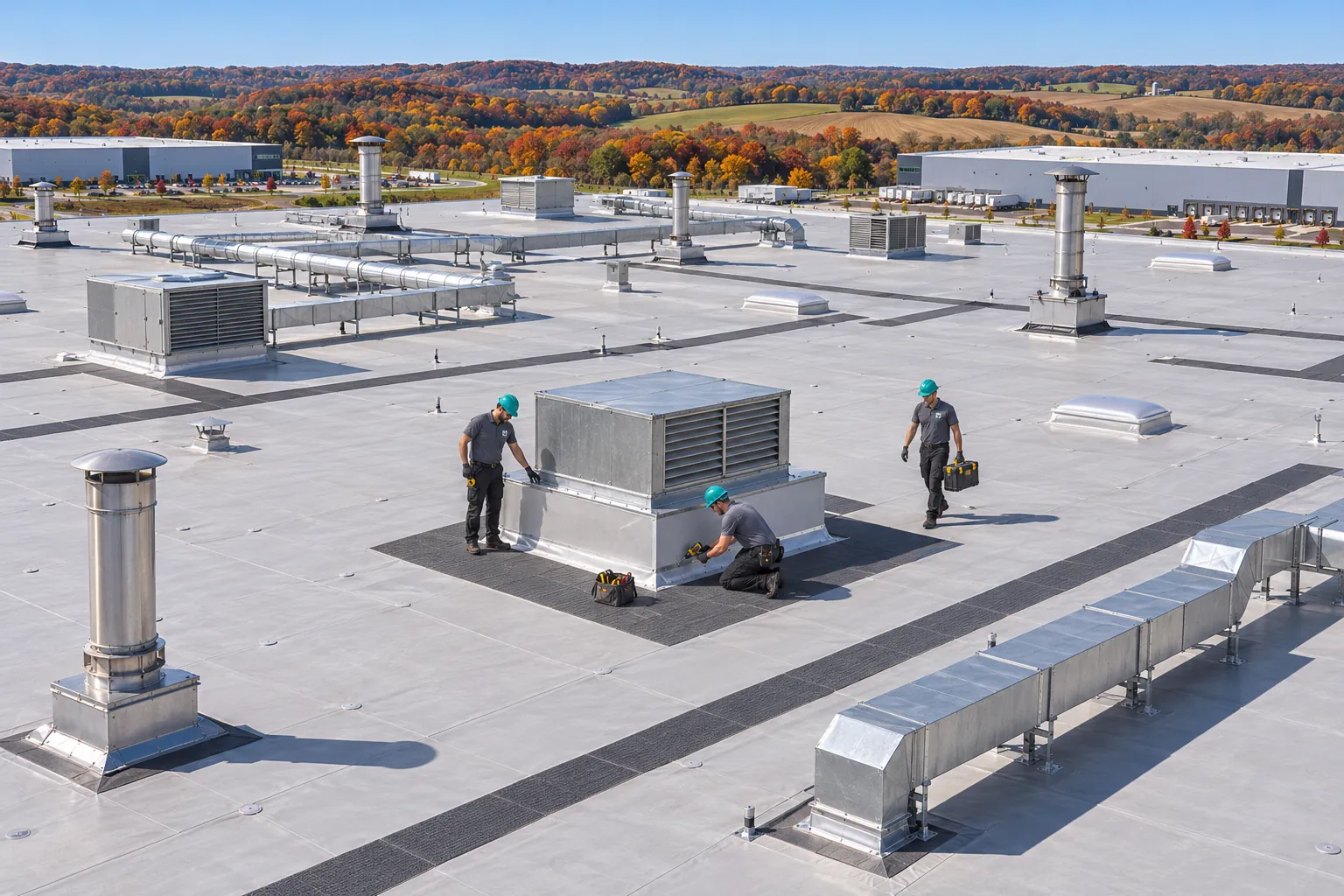
Independence industrial roof repair means working around exhaust fans, plant safety rules, and production below, so each repair is planned with your maintenance staff first.
Independence industrial roof repair ranges from a seam fixed between shifts to a skylight row reflashed during a planned shutdown.
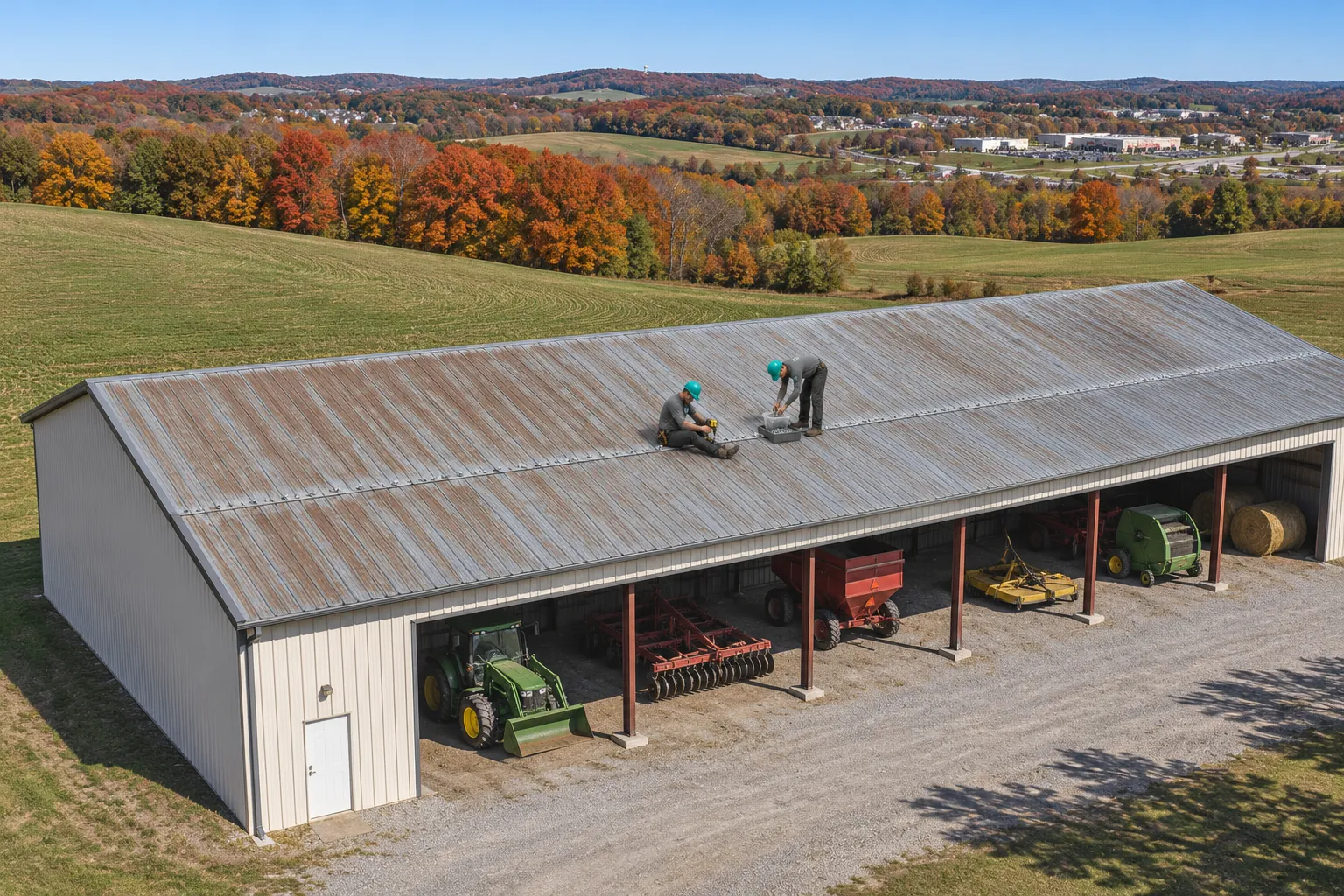
Plant roofs wear differently because of what comes out of the stacks and what happens on the floor below.
Industrial repairs combine standard roof fixes with plant controls for residue, heat, and equipment.
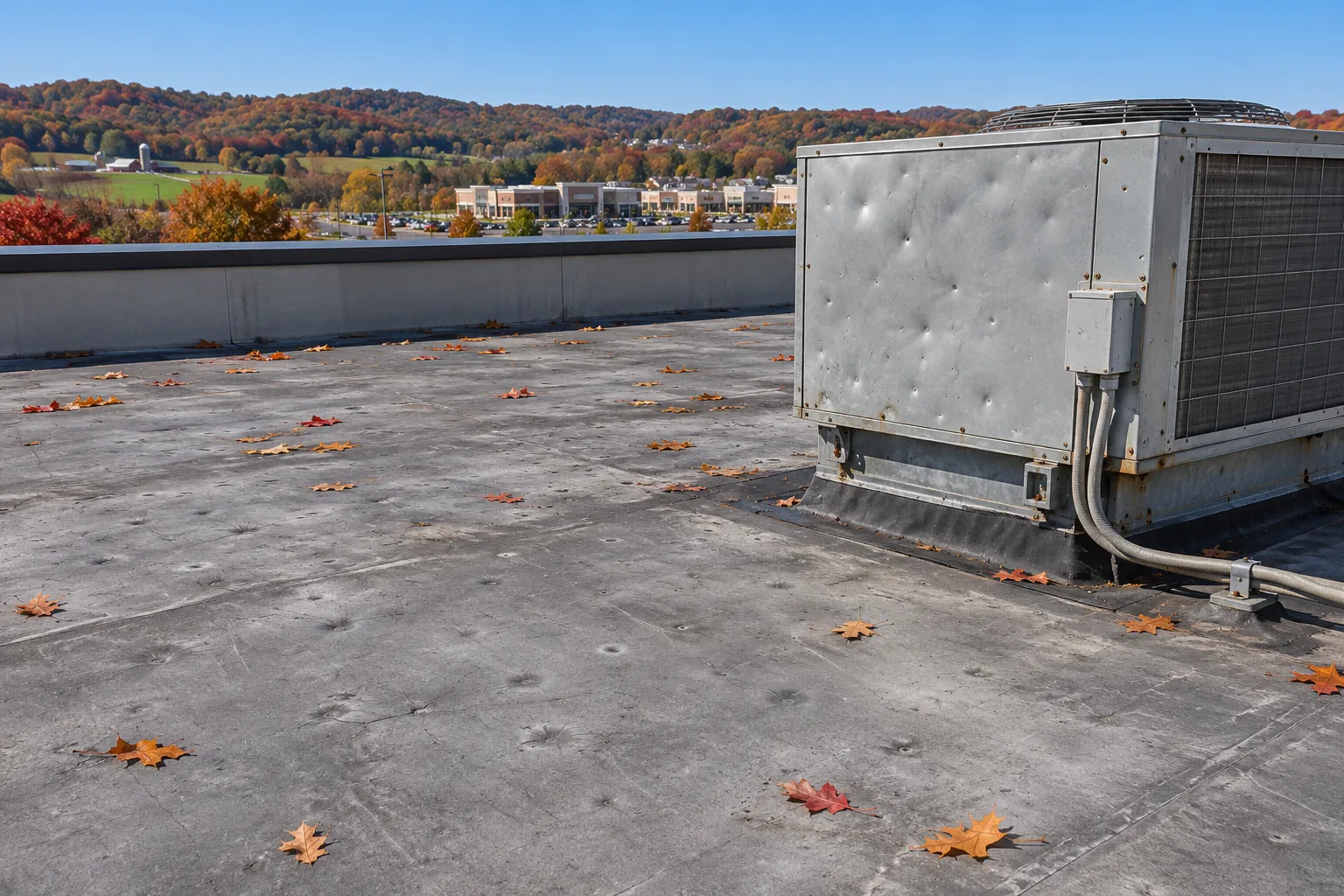
Grease and oil are removed with a cleaner the membrane maker approves, softened membrane is cut out, a sheet rated for the exposure goes on, and a containment box under the fan keeps residue off the new patch.
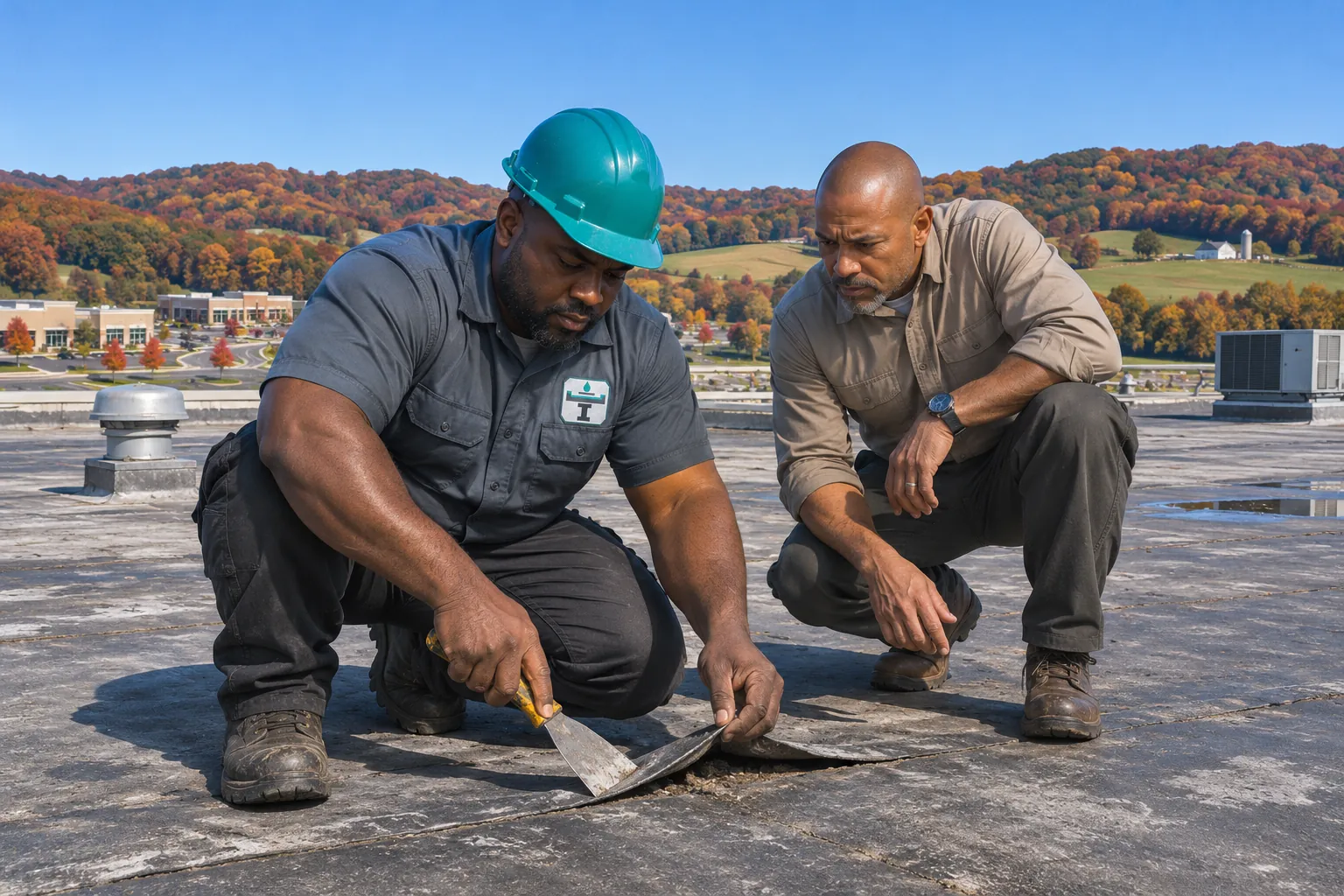
Skylight curbs are reflashed, cracked domes and vent lids are replaced, and safety screens are checked and refastened while the crew is at each opening.
Split or brittle bellows are replaced and joint covers are refastened along loose runs, where building sections meet and move against each other through the seasons.
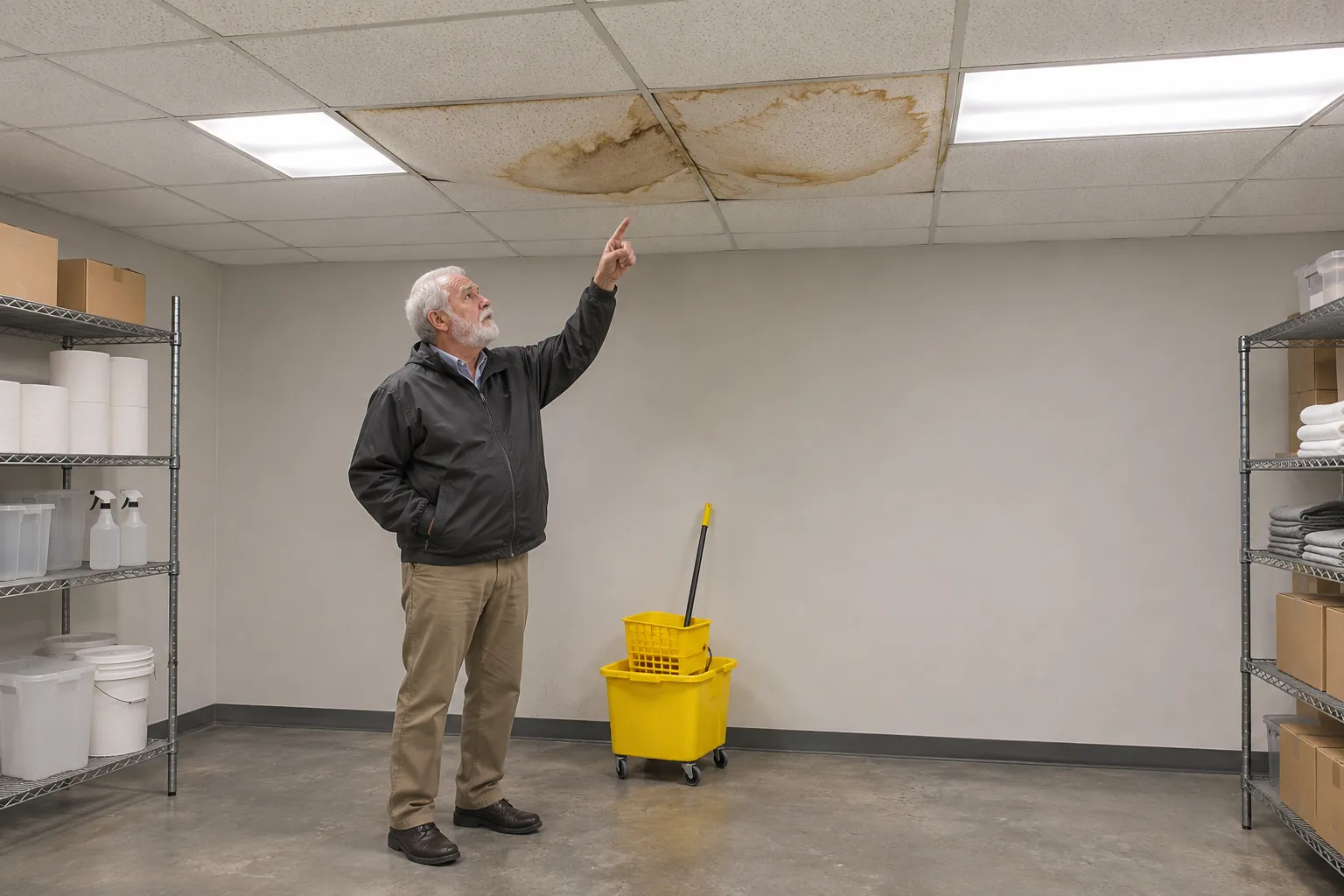
Leaks over equipment or stored goods get a roof-side temporary seal first, with the location logged against column lines so the permanent repair lands on the same spot later.
On a plant, a targeted repair keeps production running and spends maintenance money where the roof failed.
| What You Weigh | Repair | Tear-Off And Replacement |
|---|---|---|
| Production | Work fits shift changes and weekend windows | Longer staging that can touch dock and line schedules |
| Residue areas | Fixed with rated sheets and containment at each fan | Whole roof redone, and fans still need containment |
| Safety steps | Lockouts and hot-work permits for one area | Plant-wide safety plan for a long project |
| Roof records | Column-line notes map each repair | New drawings start from zero |
| Budget | Maintenance budget line | Capital project approval |
A roof-side dry-in can slow the water while your staff protects the line below. The permanent repair is then scheduled around your shifts.
Plant repairs add planning steps before and after the roof work itself.
Membrane near stacks, fan curbs, skylights, expansion joints, and drains are walked on the approved route, and residue areas are tested before any patch is chosen.
Sign-in, badge and escort rules, lockout times for roof fans and make-up air, and any hot-work permit are settled with your maintenance and safety leads.
Residue is removed with an approved cleaner, softened or swollen membrane is cut away, and wet insulation under the area is replaced.
Rated patch sheets, new curb flashing, or bellows go on, and a containment box or filter is set under any fan that keeps discharging.
Each repair is photographed and logged against the plant's column lines, so the next crew finds the same spot on a roof where one bay looks like the next.
Industrial buildings often combine several roof types and a long list of penetrations.
Intermittent leaks over equipment get traced from the drip uphill before any membrane is cut near the line.
Commercial roof leak repairLarge single-ply fields on distribution buildings need seam probing and drain resets alongside the plant work.
Flat roof repairOlder plant sections with panel roofs leak at fastener rows and skylight panels.
Commercial metal roof repairPlant conditions shape how crews reach and fix the roof. Exhaust fans are locked out before anyone works near them, torch-applied patches need hot-work permits, fall protection goes up near skylights and edges, and access runs through plant security on approved routes. Residue from the plant also changes which patch materials will hold near the stacks.
Residue comes off first, since patches and sealants grip poorly on grease- or oil-coated membrane. The area is degreased with an approved cleaner, softened or swollen membrane is cut out, a sheet rated for the exposure is applied, and a grease containment box or filter goes under the fan so the residue stops returning.
With a temporary dry-in from the roof side first. Your staff sets catch basins or diverters inside, the crew seals the seam, curb, or fastener feeding the leak, and the spot is logged against column lines. The permanent repair follows once the surface dries, at a time that suits the plant.
Repairs are fitted into shift changes, weekend shutdowns, or planned maintenance windows set with your maintenance and safety leads.
Fan and make-up air lockouts, crane or lift slots away from dock traffic, odor control near air intakes, and badge and escort rules are agreed ahead. Small seam or fastener repairs often fit one shift, while a large curb or skylight row can span a shutdown.
Both sit where the roof moves and opens, so their flashing and covers get resealed or replaced. Skylight curbs are reflashed and cracked domes replaced, safety screens are checked, split or brittle expansion joint bellows are replaced, joint covers are refastened, and cracked smoke vent lids get the same attention.
Torch-applied cap sheet patches on modified bitumen are hot work and need one. Hot-air welding and other heat tools fall under whatever rules your safety lead sets, and the crew works to the permit issued for that area of the roof.
Share your shift schedule, lockout rules, and where the water lands inside. We will inspect the roof and send a free estimate that fits your plant calendar.
Want a call back about your roof?
Or call us now: +1 (513) 775-5303