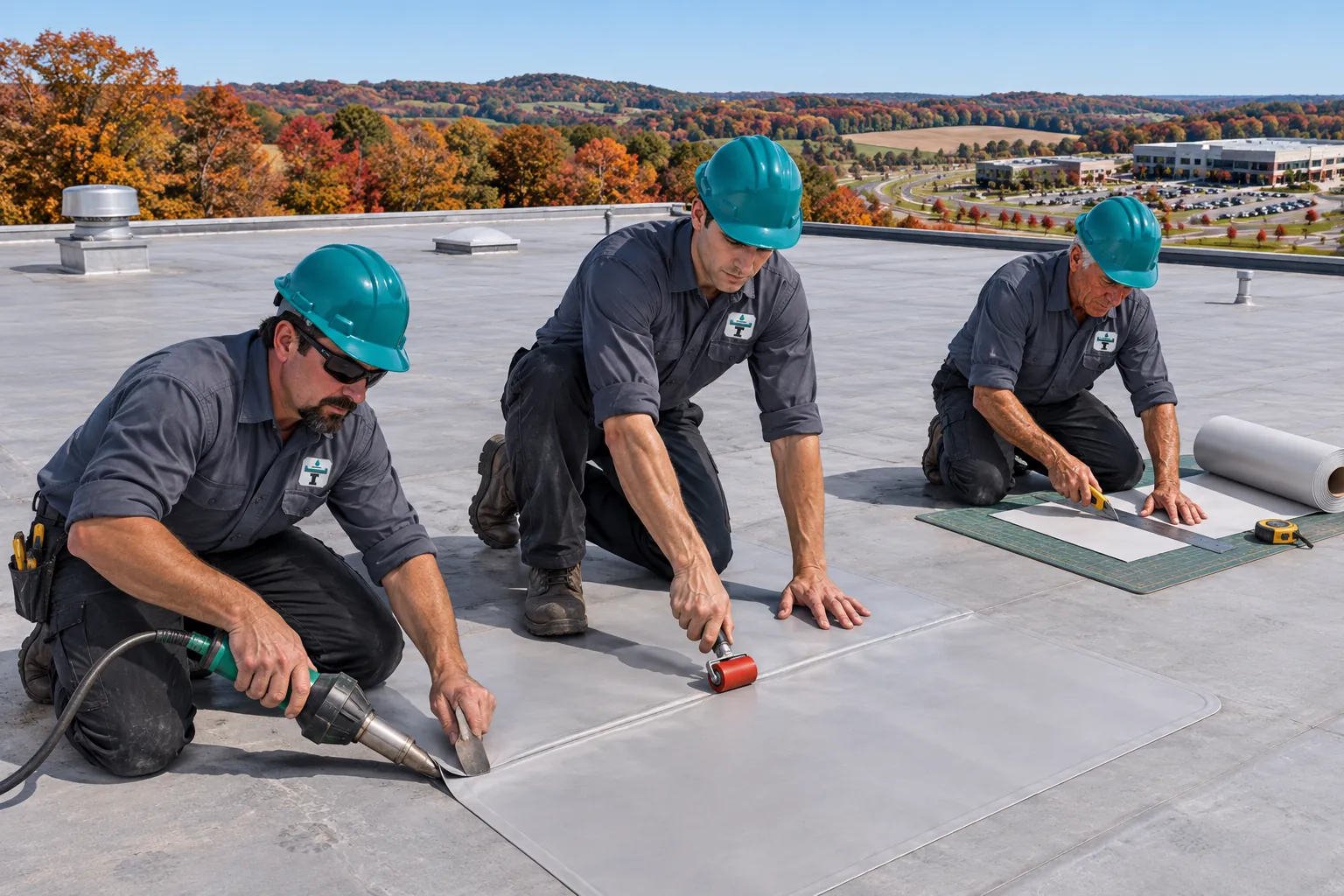
What We Do
- Leaks
- Trace and repair the entry point
- Wet insulation
- Cut out and replace soaked boards
- Rooftop units
- Reflash curbs and seal penetrations
- Insurance
- Provide dated photos of the damage
- Permits
- Tell you when to call the building office

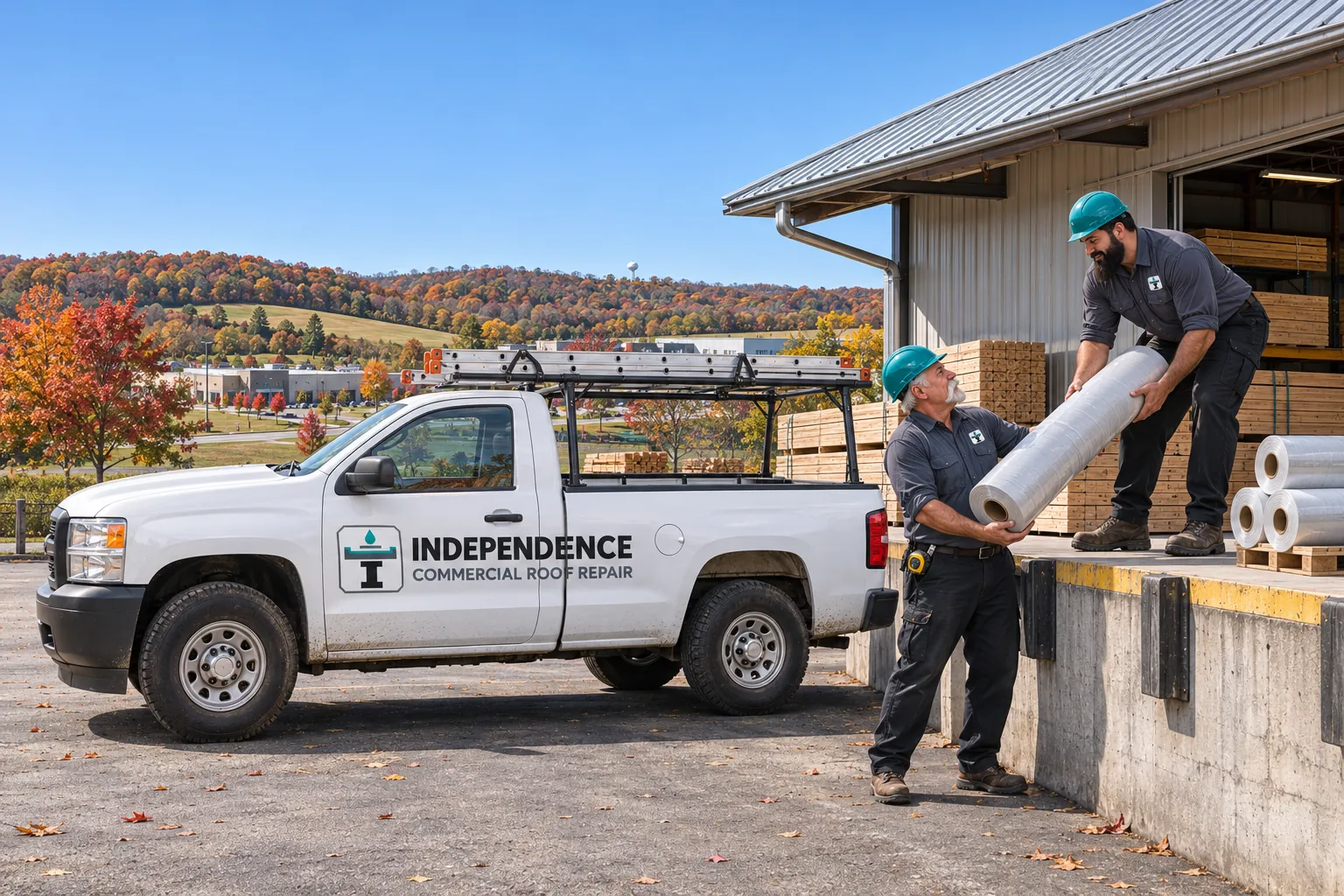
As a commercial roof repair company in Independence, we fix flat, metal, and industrial roofs by finding the failed detail first and matching the repair to it.

Our commercial roof repair company in Independence works one way on every roof. We find where water actually enters, repair that detail with matching material, and leave a record of what was done.
That record matters. Leaks on commercial roofs repeat in patterns, and dated photos of past repairs make the next search shorter and help you decide when repair should give way to restoration or replacement.
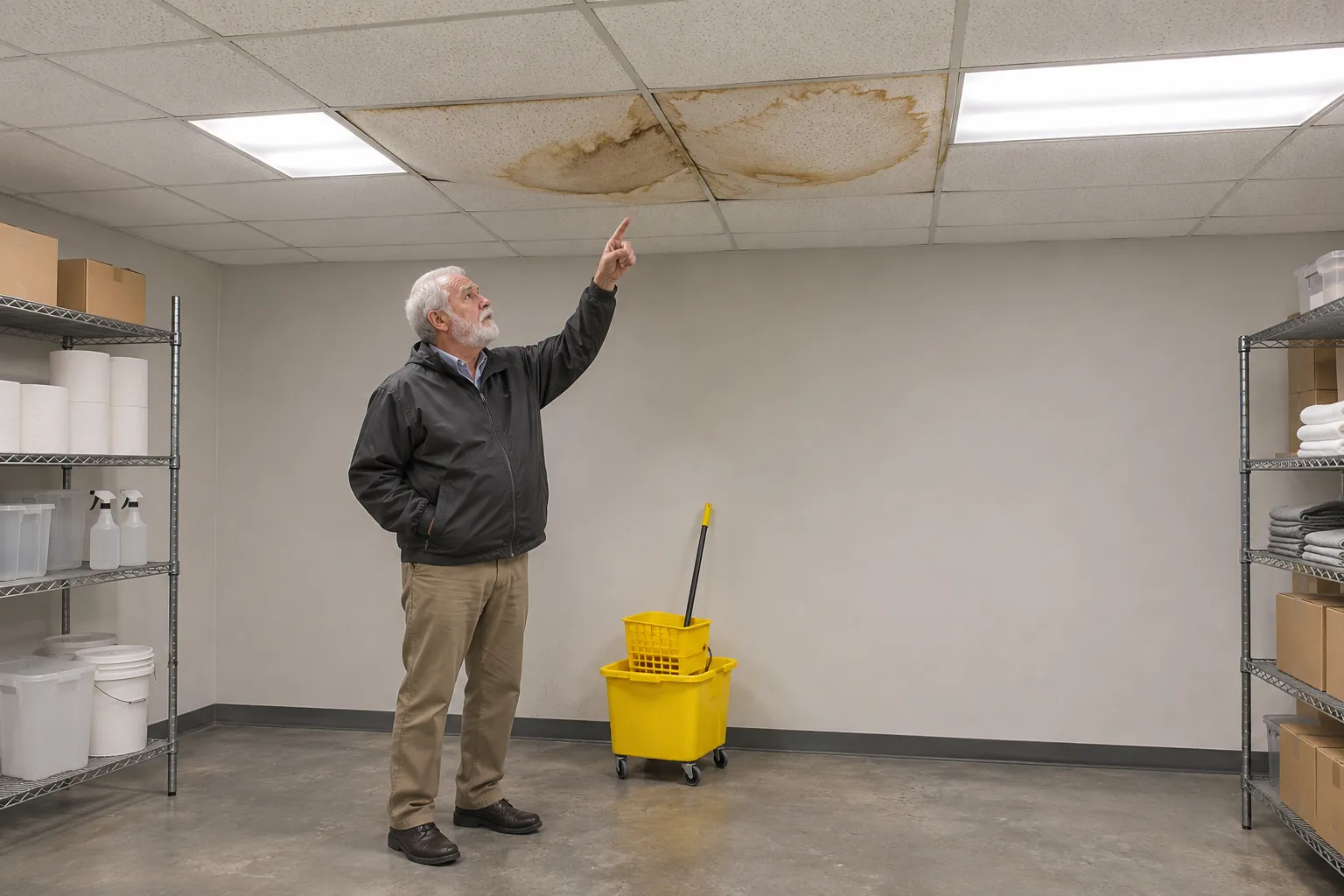
Repeat leaks usually mean the first fix landed on the drip instead of the entry point. A traced repair goes after the source.
Every repair visit covers these items near the reported problem, so small issues get caught alongside the main one.
Clear limits keep repairs honest. Here is what a repair visit covers and what it leaves to others.
Twice a year, in spring and fall, plus after any major storm. Each check covers drains and scuppers, seams and laps, flashing at curbs and parapets, sealant at pitch pans and termination bars, and fasteners on metal sections. Notes and photos from every visit build a history that makes the next leak easier to trace.
The 2018 Kentucky Building Code, the state's edition of the 2015 International Building Code, per the Kentucky Department of Housing, Buildings and Construction.
The same list names the 2012 IECC for commercial energy. Fire classification of patch materials, wind-resistant edge metal, and recover limits are the code points repairs touch most, and replacing insulation over a large area raises energy code questions.
Winter work focuses on stopping active leaks, since cold, ice, and snow limit which sealants, adhesives, and welds can go on. Snow is cleared to expose seams, ice at drains and gutters is broken up, temporary patches hold until a warmer dry day, and cold-weather tapes go on only within their listed temperature range.
A photo report showing the damage and the finished repair, notes on what failed, and a short list of other items spotted on the walk. Owners keep it with past records so each future leak starts with a history.
Yes. Spring and fall visits can go on your calendar, with an extra walk after major storms. Each one follows the same checklist and adds to the same photo history for the building.
Small splits at flashing let water into the insulation, and freeze-thaw cycles widen them each winter. Wet boards then hold water against the deck, which turns a short flashing repair into a larger section of cut-out and replacement.
Call with the roof type, the building use, and where water shows up. We will inspect the problem area and send a free repair estimate.
Want a call back about your roof?
Or call us now: +1 (513) 775-5303