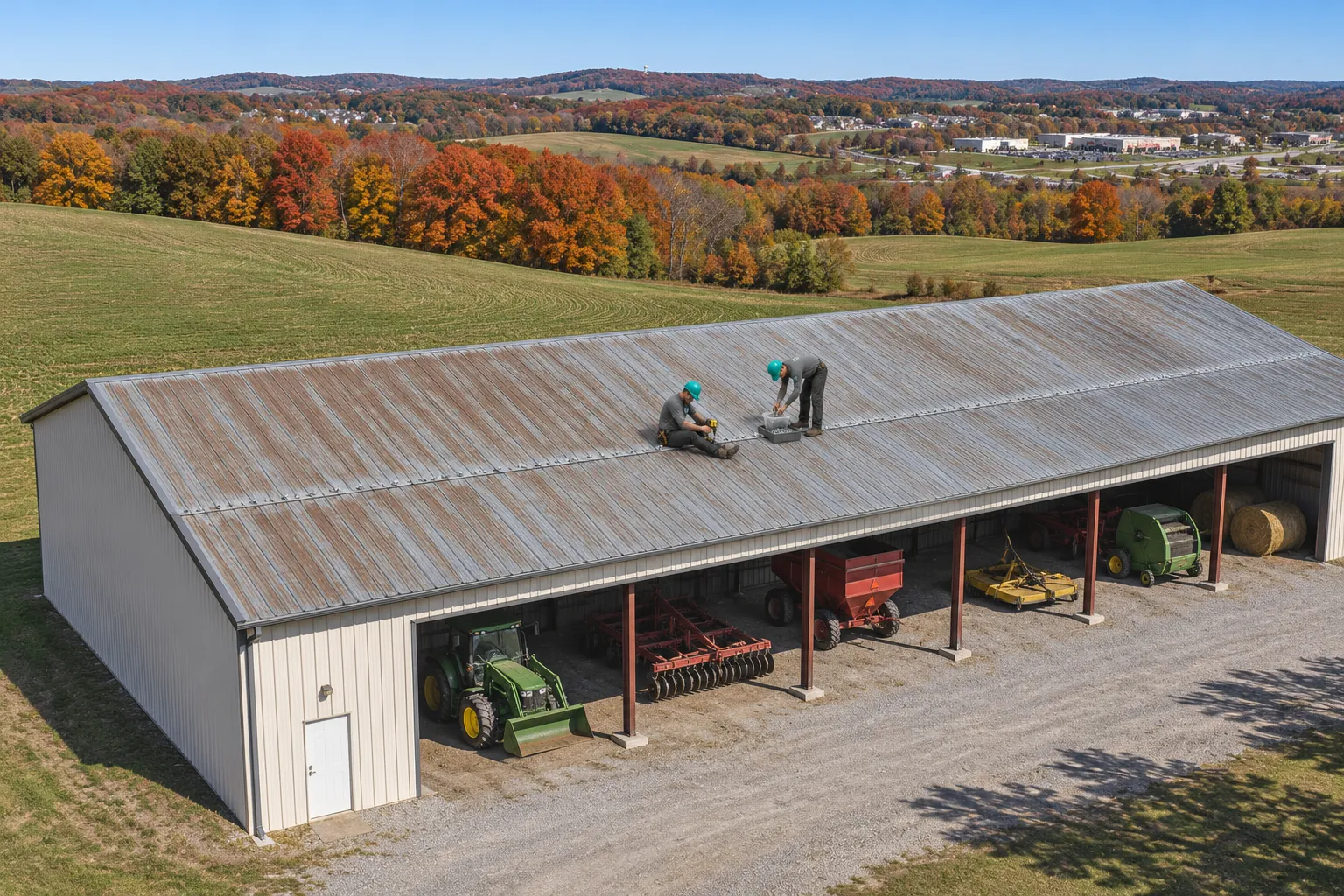
Repair Fits
- Damage
- A puncture, split seam, or torn flashing in one area
- Insulation
- Dry past a few feet from the leak
- Membrane
- Still flexible, with tight laps
- Ponding
- Clears within two days around the drain
- Next step
- Patch, reweld, or reflash

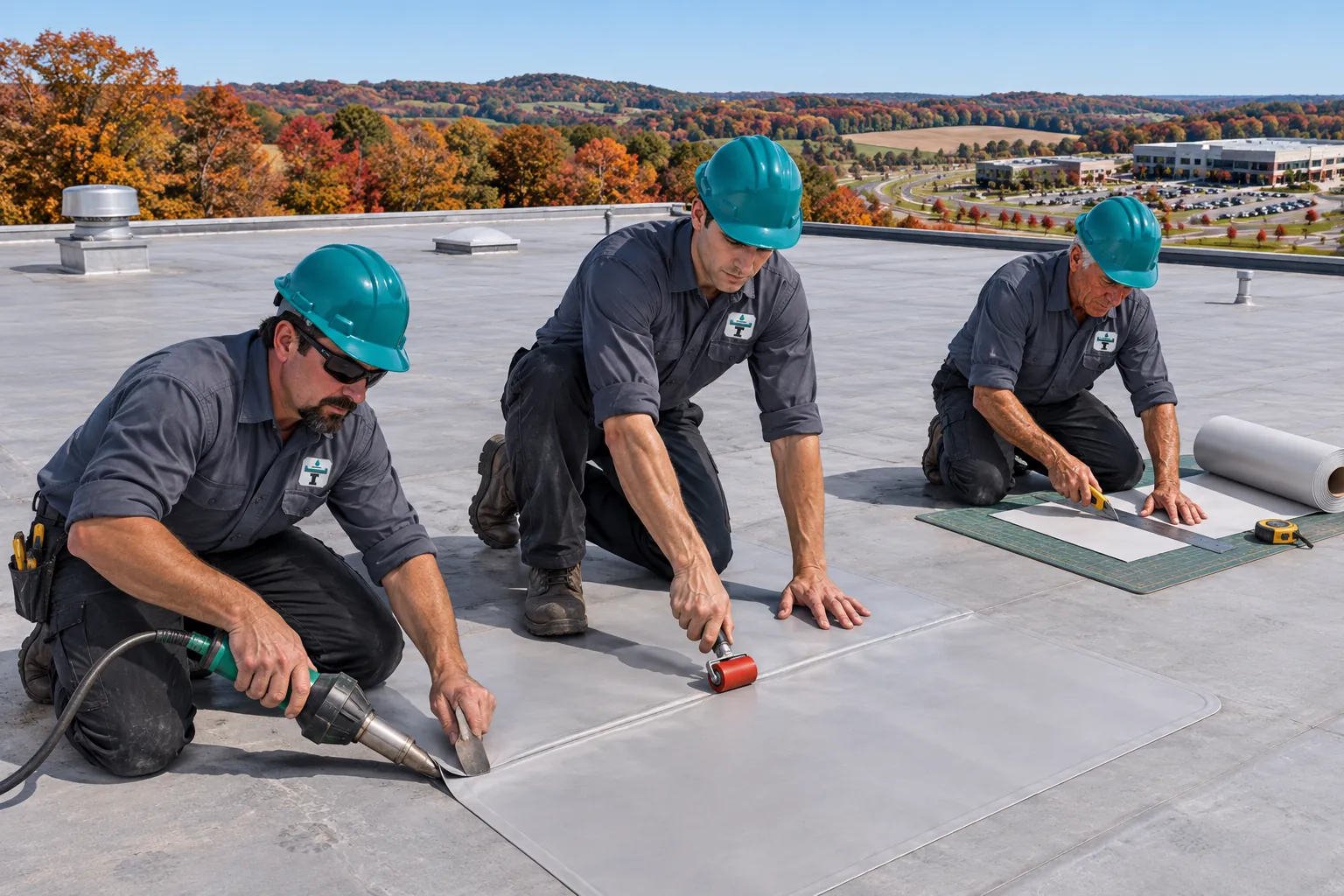
Our Independence flat roof repair work covers TPO, EPDM, PVC, modified bitumen, and built-up gravel roofs on commercial and industrial buildings.
Independence flat roof repair makes sense when damage stays in one area. Compare your roof with the two cases below before you call.
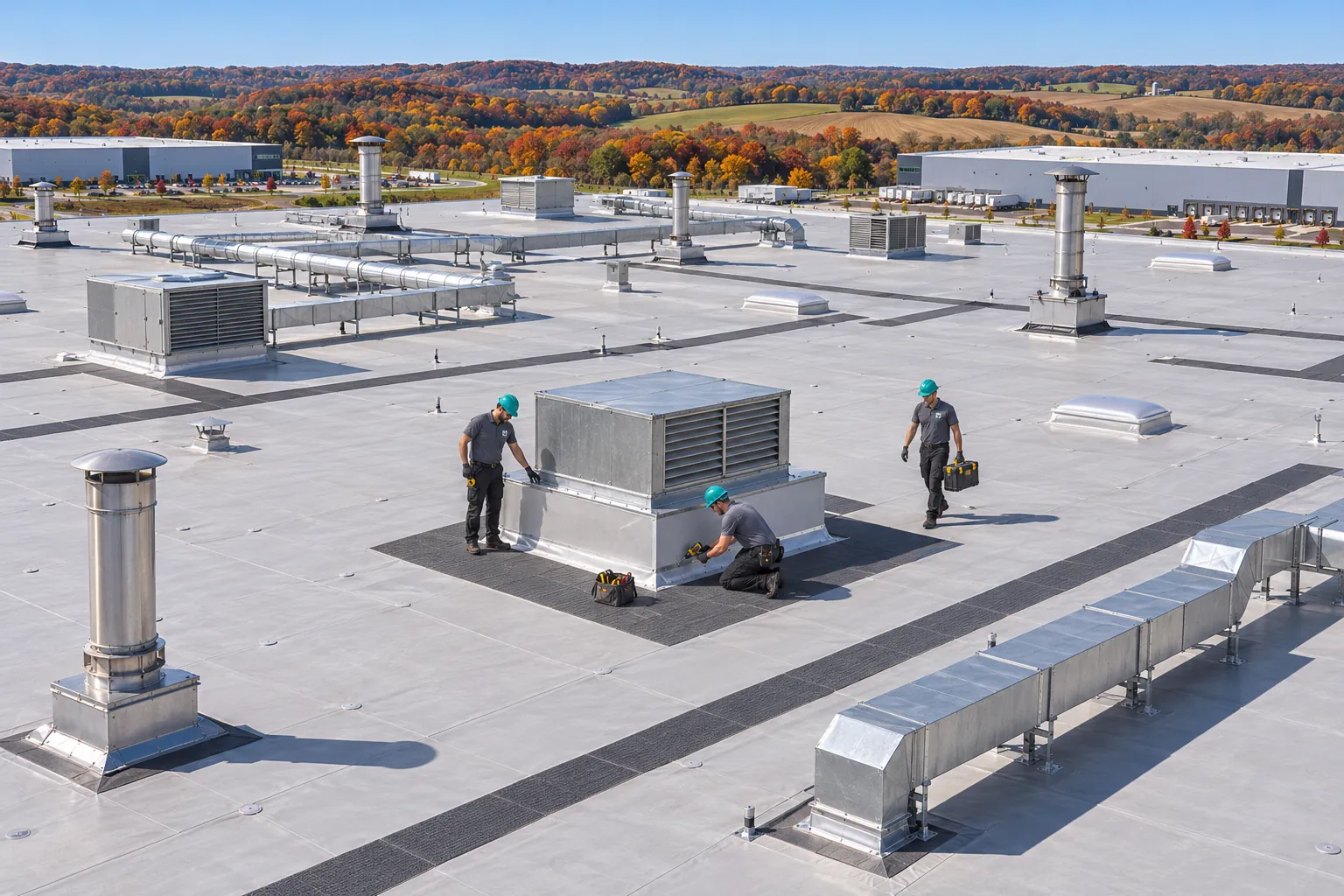
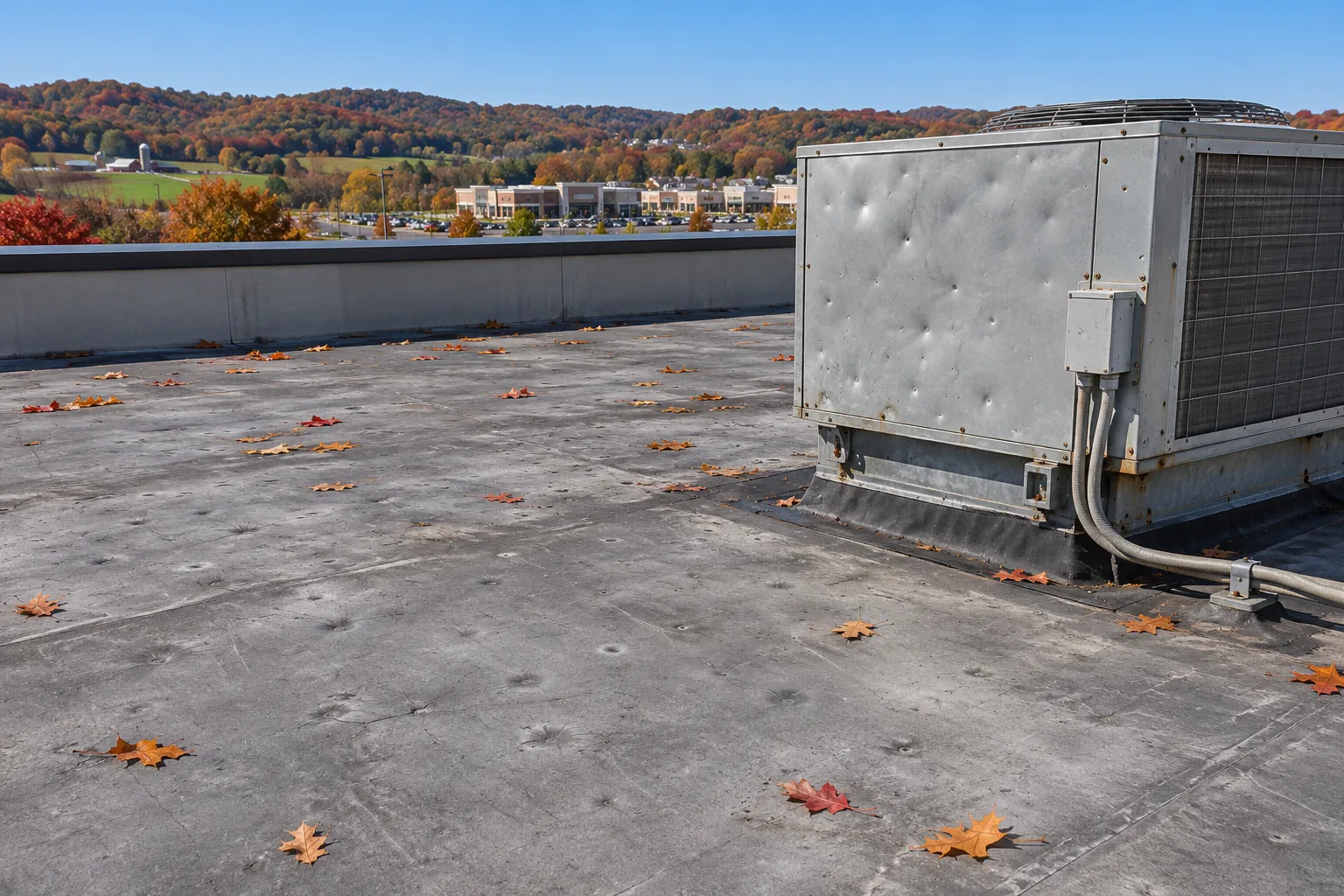
Flat roof damage shows itself in one of three places before it spreads into the insulation.
Every patch matches the sheet it covers, because asphalt mastic softens single-ply membrane and EPDM tape grips TPO poorly.
TPO and PVC punctures get a cleaned, hot-air-welded patch with rounded corners. EPDM gets cleaned, primed, and covered with a peel-and-stick patch. Each patch runs well past the damage so its edges sit on clean, intact membrane.
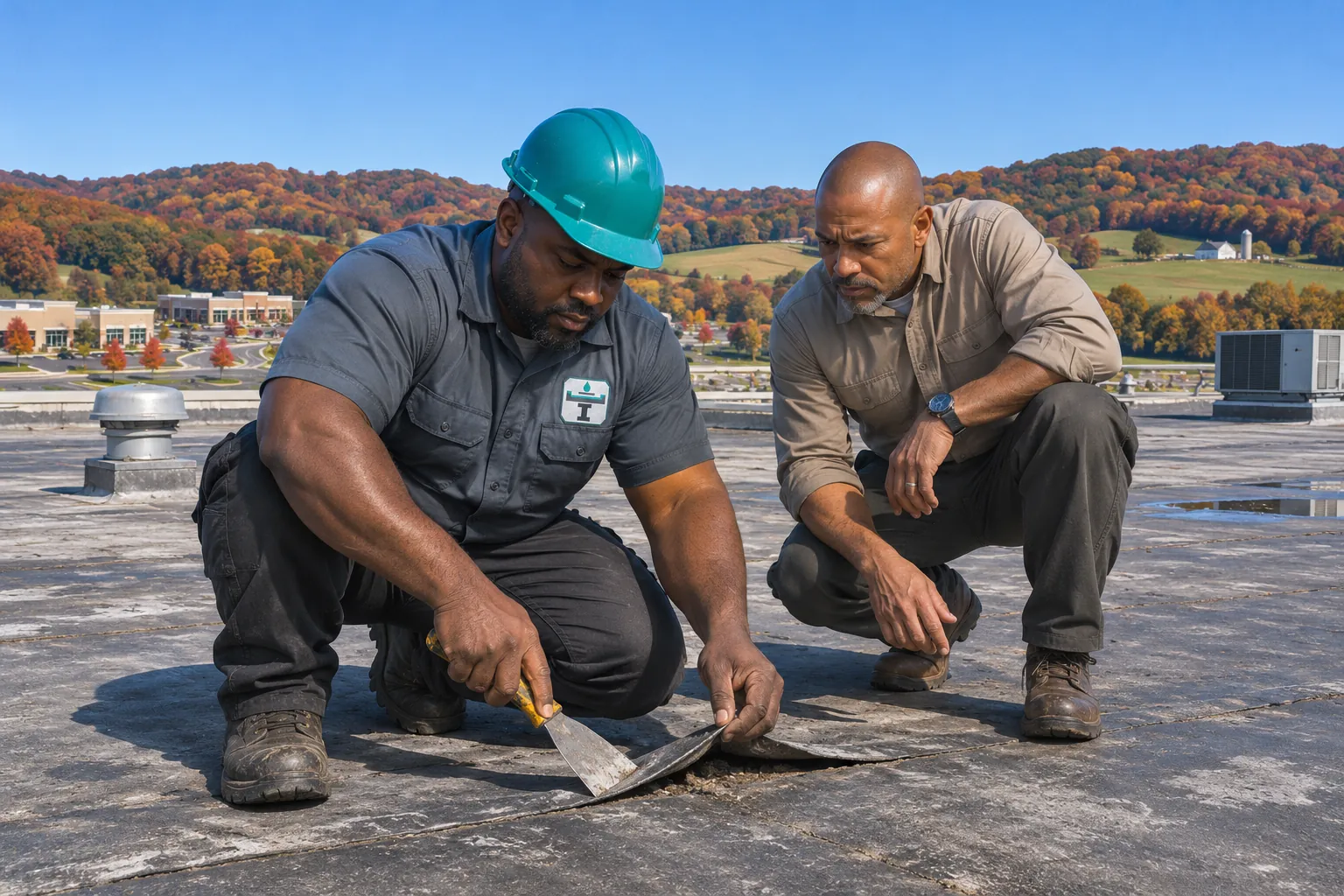
Open laps are probed to find where the bond ends, cleaned of dirt and oxidized film, then rewelded on TPO or primed and taped on EPDM. Neighboring seams get probed too, since one open lap often signals others.
Cracked blisters on built-up and modified bitumen roofs are cut open, dried, and patched with a cap sheet or with mastic and felt. Intact small blisters get marked and checked at the next inspection instead.
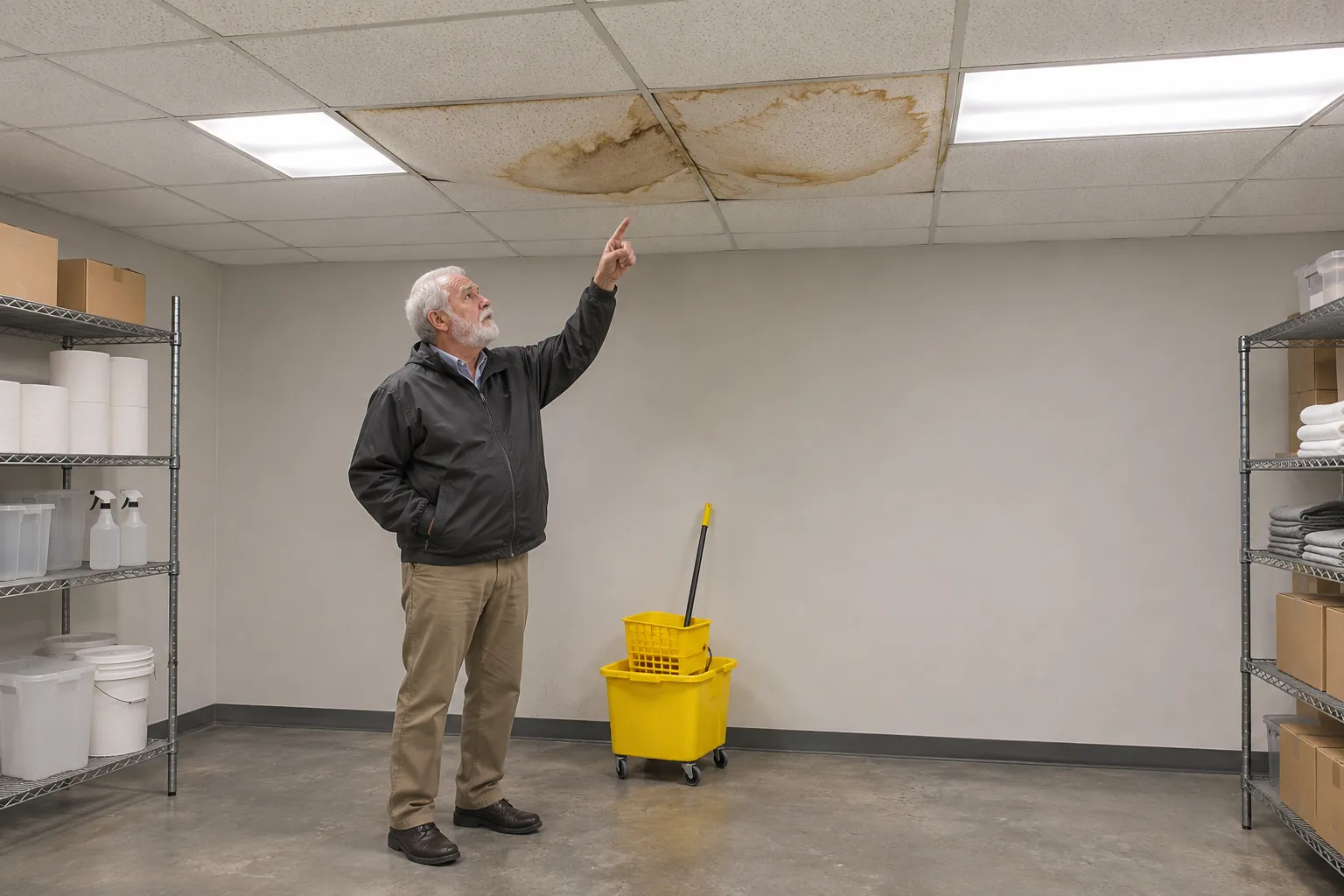
Ponding repairs start at the drain: strainers cleared, silt removed, and a high drain bowl reset. Where water still sits days after rain, a small tapered cricket or sump moves it toward the outlet.
A targeted flat roof repair keeps a working membrane in service. Here is how it compares with tearing the roof off.
| What You Weigh | Repair | Tear-Off And Replacement |
|---|---|---|
| Membrane life | Keeps an intact sheet working after one area fails | Removes good membrane along with the damaged area |
| Wet insulation | Cuts out only the soaked boards under the leak | Replaces insulation across the whole roof area |
| Building operations | Work stays in one section of the roof | Staging, dumpsters, and protection across the property |
| Material match | TPO welded to TPO, EPDM taped to EPDM | New system chosen from scratch |
| Records | Dated photos add to the roof repair history | Starts a new roof file and drawings |
Water still standing two days after rain usually means a clogged strainer or a drain sitting higher than the roof around it. Both are repair jobs.
Flat roof repairs follow a fixed order so nothing gets patched over wet insulation.
Seams, flashing at walls and curbs, drains, and the membrane field near the problem are walked and photographed. Blisters and lifted laps get marked so nobody steps on them.
Laps are probed with a seam tool, and a moisture meter checks the insulation around the damage. A core cut settles any doubt about how far water has spread.
Ladder or hatch access, lift placement, and any shutoff of rooftop units near the repair are set with your facility contact before materials go up.
Wet boards are cut out and replaced, the area is cleaned and dried, and a matching patch goes on: welded for TPO and PVC, primed and taped for EPDM.
You get photos of the damage and the finished repair, the seam and drain notes, and a list of anything that needs watching at the next inspection.
Flat roofs often share a building with metal sections, rooftop units, and plant equipment.
Additions with metal panels leak at the transition flashing where panel meets membrane, so both sides get repaired together.
Commercial metal roof repairWhen the drip inside lines up with no visible damage, leak tracing finds the entry point before any patch goes on.
Commercial roof leak repairPlant roofs add exhaust residue and hot-work permits, which change how a flat membrane is cleaned and patched.
Industrial roof repairDamage that stays in one area is a repair job: punctures from tools or hail, seams opening on TPO, EPDM, or PVC, flashing pulling away at walls and curbs, blisters on built-up roofs, and ponding at blocked drains. Once a moisture scan shows wet insulation spreading far past the leak, a patch only buys time.
Each membrane gets a patch of its own kind, attached the way the original sheet was. TPO and PVC take a hot-air-welded patch, EPDM takes a primed peel-and-stick patch, modified bitumen takes a torched or cold-applied cap sheet, and built-up gravel roofs take mastic, reinforcing felt, and gravel bedded back over the top.
Trapped moisture or air between roof plies expands in the sun and lifts the surface, mostly on built-up and modified bitumen roofs. Small intact blisters get marked and watched. Cracked ones are cut open, dried, and patched, and clusters of blisters call for a moisture check because they often sit over wet insulation.
Clearing the drain comes first: strainers, leaves, and silt come out of the bowl, and a drain sitting higher than the roof around it gets reset. If water still stands days after rain, a small tapered cricket or sump is built at the low spot, or a scupper is added at a wall.
TPO seams are cleaned and rewelded, while EPDM seams are cleaned, primed, and covered with a fresh strip of seam tape. The crew probes the open lap to find where the bond ends, repairs any T-joint in the run, and probes the neighboring seams, since laps of the same age tend to fail together.
That depends on the patch matching the membrane and going on a clean, dry surface. A welded TPO patch or primed EPDM patch becomes part of the sheet around it. Patches over wet insulation or in standing water wear out fastest, which is why drains and wet boards are handled in the same visit.
Send us photos of the seam, blister, or drain and a note on when the leak shows up. We will inspect the roof and price the repair.
Want a call back about your roof?
Or call us now: +1 (513) 775-5303