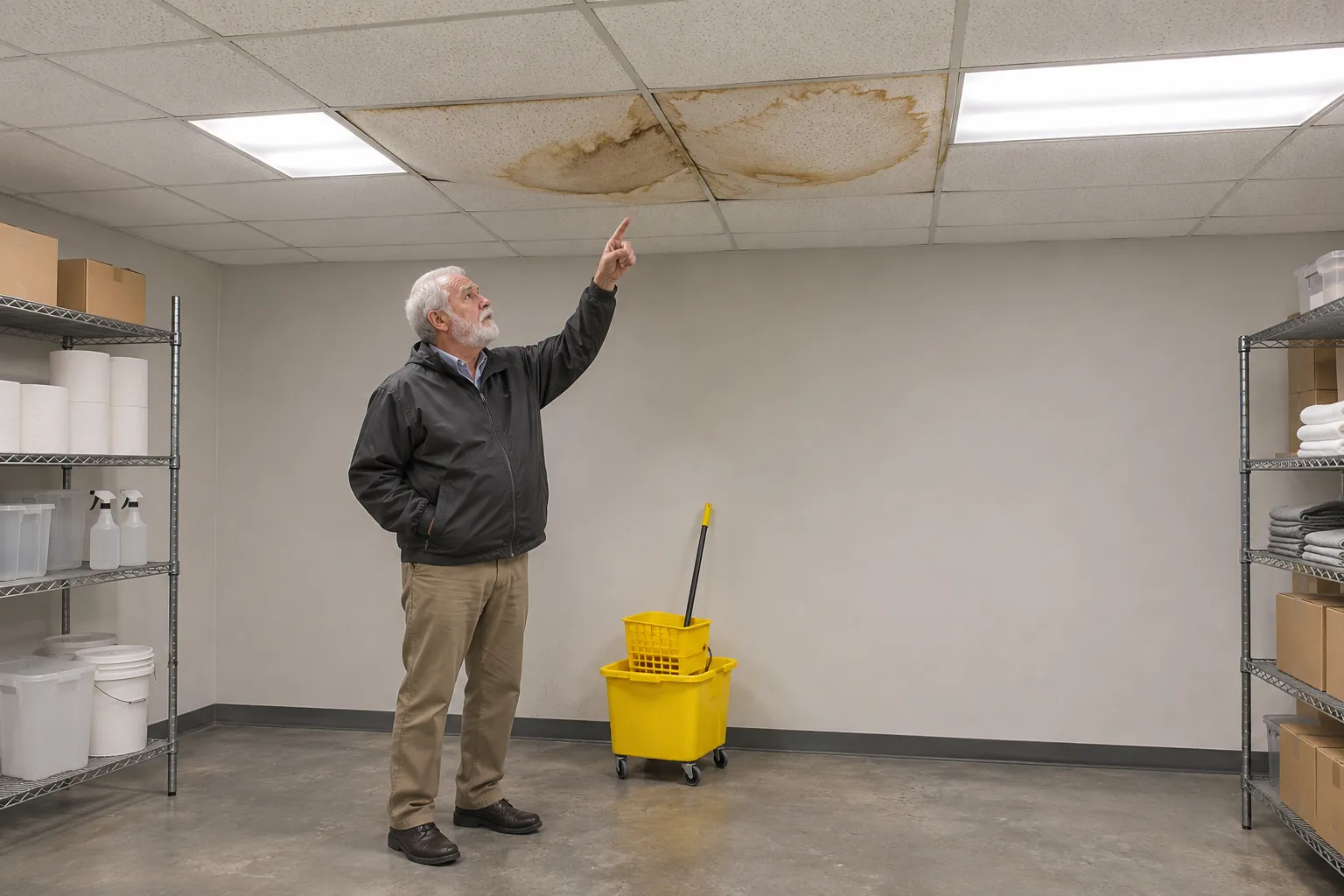
Panel Roof Repair Fits
- Rust
- Surface rust or a few pinholes
- Fasteners
- Loose or stripped in spots
- Panels
- Same profile still available
- Leaks
- At laps, ridges, or skylights
- Next step
- Refasten, reseal, patch, or swap panels

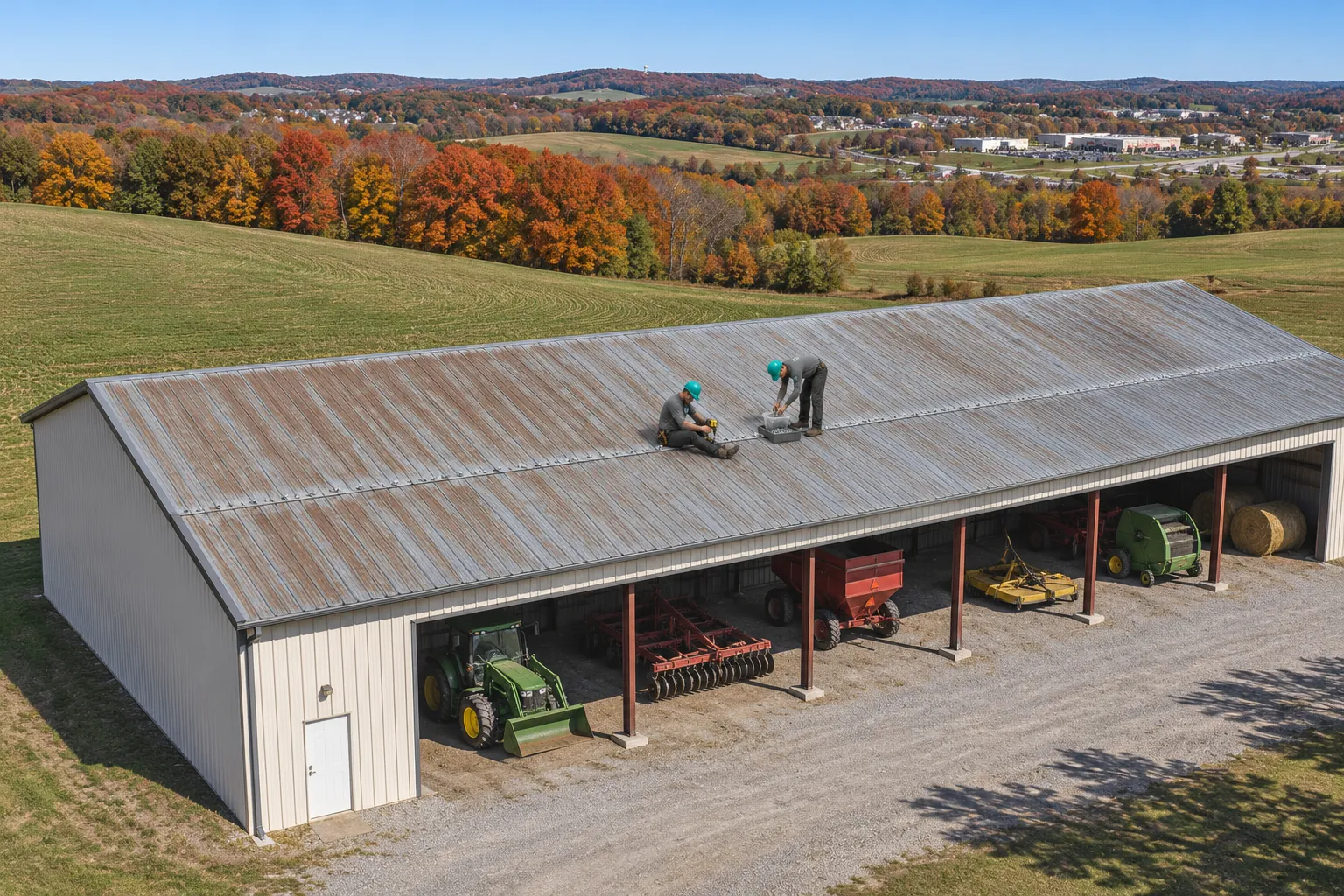
We handle Independence commercial metal roof repair on shops, warehouses, and barns, from backed-out screws and leaking laps to rusted panels and loose trim.
Independence commercial metal roof repair works when rust and leaks stay at the small parts. Compare these two conditions.
Metal buildings move every day as panels heat and cool, and that movement shows up first at screws, laps, and trim.
Metal roof repairs start at the small parts and move into the panel field only when rust has spread there.
Backed-out screws are pulled and replaced with oversized or longer screws carrying new washers, so each one bites fresh metal in the purlin. A torque-limiting driver sets them so the washers compress evenly.
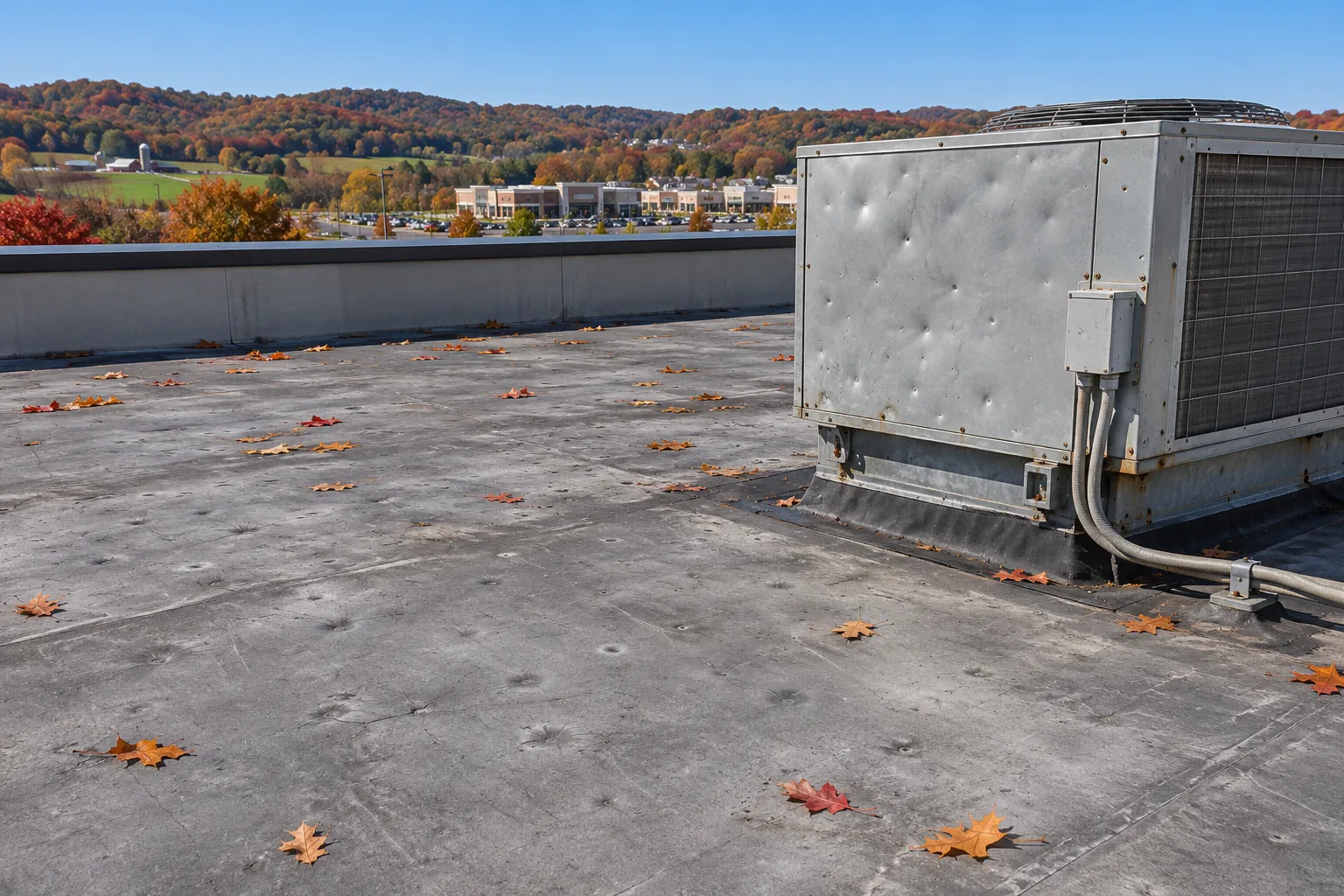
End laps and side laps are cleaned of old sealant and rust, resealed with butyl tape, and stitched tight. Backup plates at end laps hold the joint closed between purlins on low-slope panels.
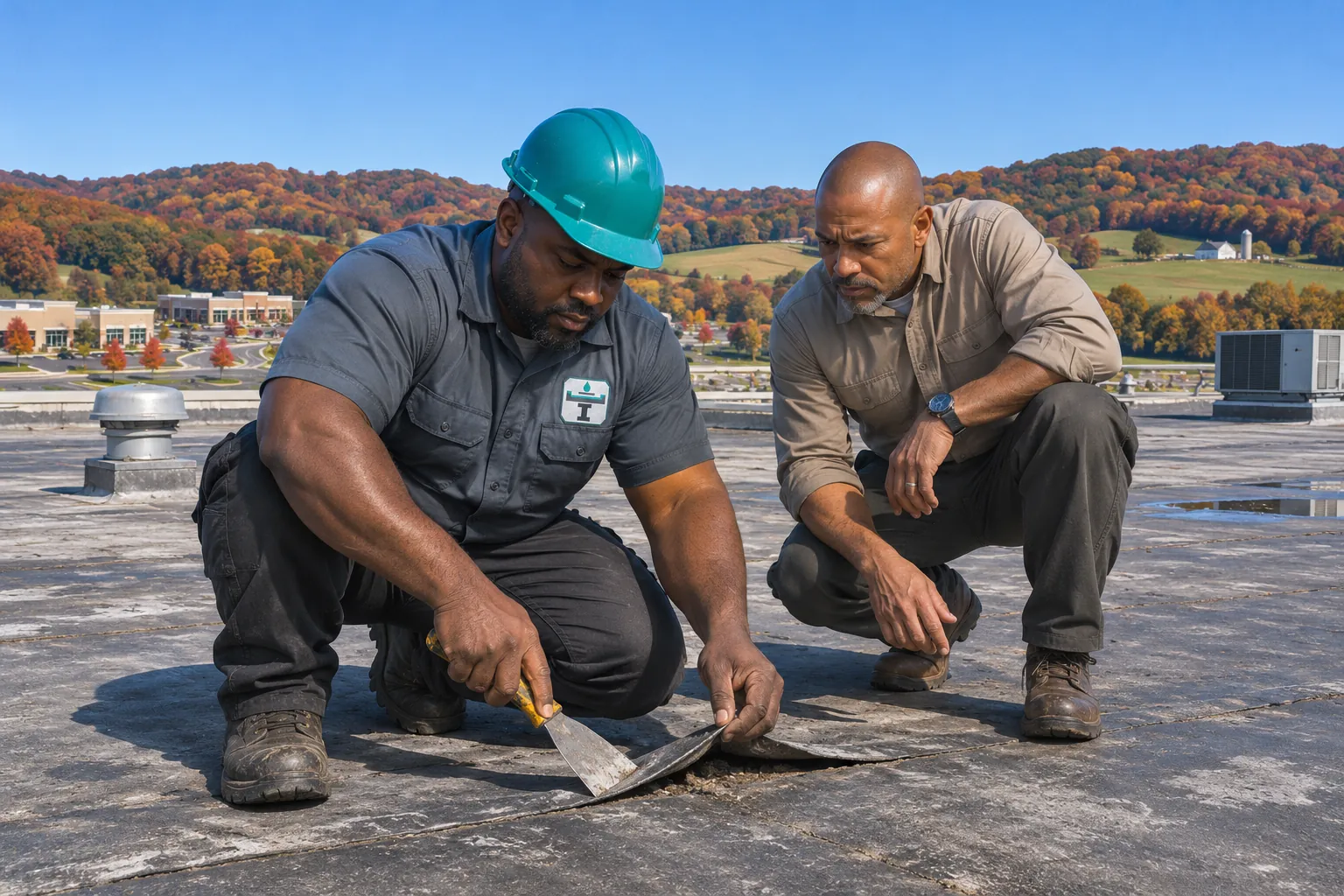
Surface rust is wire-brushed and primed, pinholes get a metal or reinforced fabric patch, and holes across a panel run mean a new panel lapped and fastened to match the rib spacing and height.
Gutter seams are resealed and rusted runs replaced, hangers are reset for pitch, ridge caps get new foam closures, and loose rake and eave trim is screwed back down before wind peels it away.
Most metal roofs leak at a handful of small parts, which makes a targeted repair practical. Here is how it compares with a new roof.
| What You Weigh | Repair | Tear-Off And Replacement |
|---|---|---|
| Steel in place | Keeps solid panels and purlins working | Removes panels that still have life in them |
| Leak sources | Fixes the screws, laps, and trim where water gets in | Replaces every part at once |
| Matching profile | Replacement panels measured to the existing rib spacing | New profile chosen for the whole roof |
| Operations below | Shops and storage keep running under the work | Contents protected or moved during tear-off |
| Upkeep afterward | Fastener lines checked along each purlin run | New fastener pattern to inspect from scratch |
Loose screws rarely show up alone. One backed-out fastener usually means the whole purlin run needs checking before the next hard rain.
Metal repairs follow the water from the inside drip to the part that let it in.
Fastener rows, end and side laps, ridge caps, skylight panels, and gutters are checked along the purlin lines above every reported drip.
Drips are mapped against purlins and columns inside, which shows which fastener row or lap overhead lines up with the water.
Rib spacing, rib height, and gauge are measured before steel is ordered, so a replacement panel laps cleanly into the old ones.
Screws are replaced and torqued, laps are cleaned and taped, and rusted spots are primed or patched in the order water flows across the roof.
Your report shows each repaired lap and fastener row, plus the areas of surface rust to look at during the next spring or fall check.
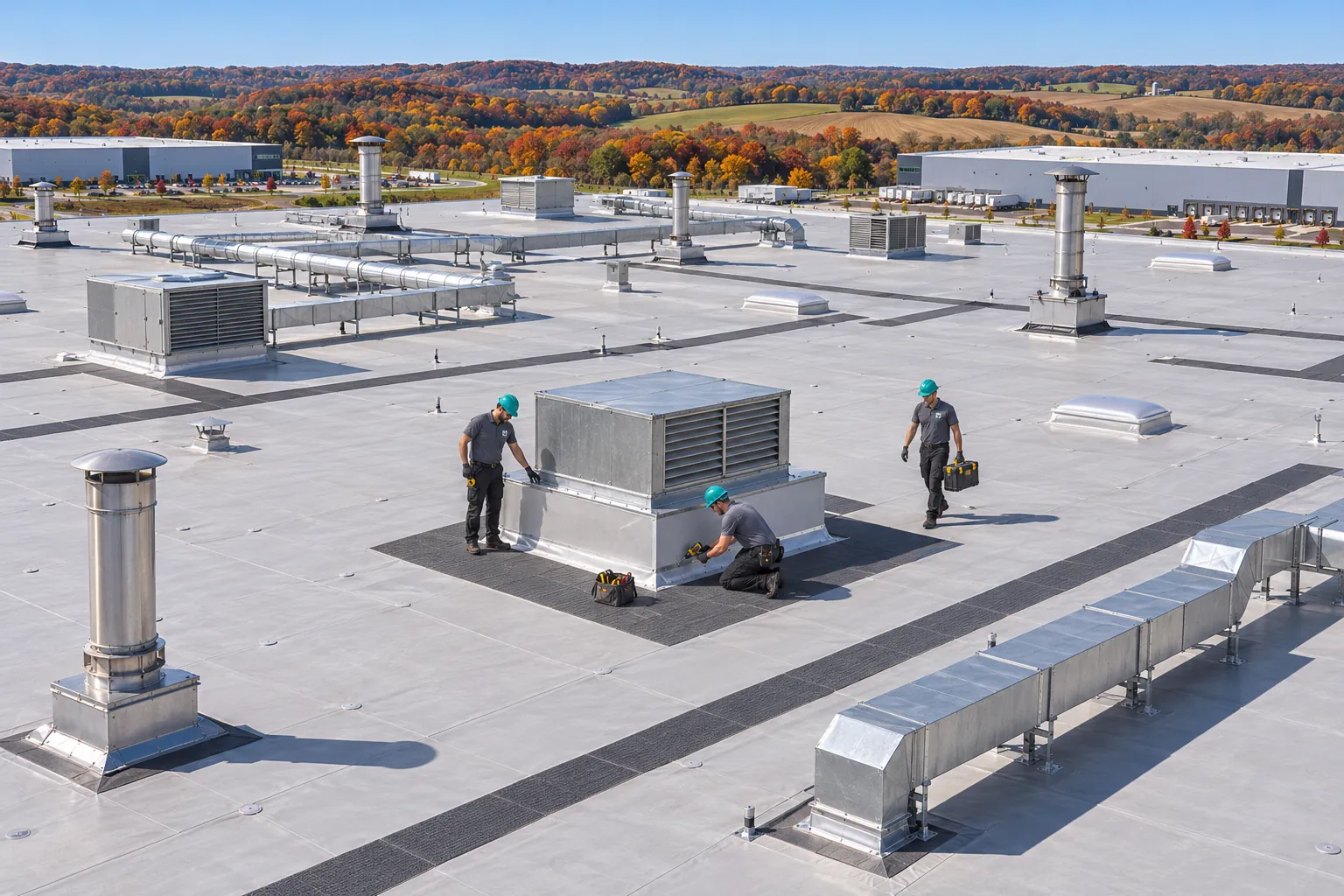
Many metal buildings in the area also carry membrane sections, rooftop equipment, or plant exhaust.
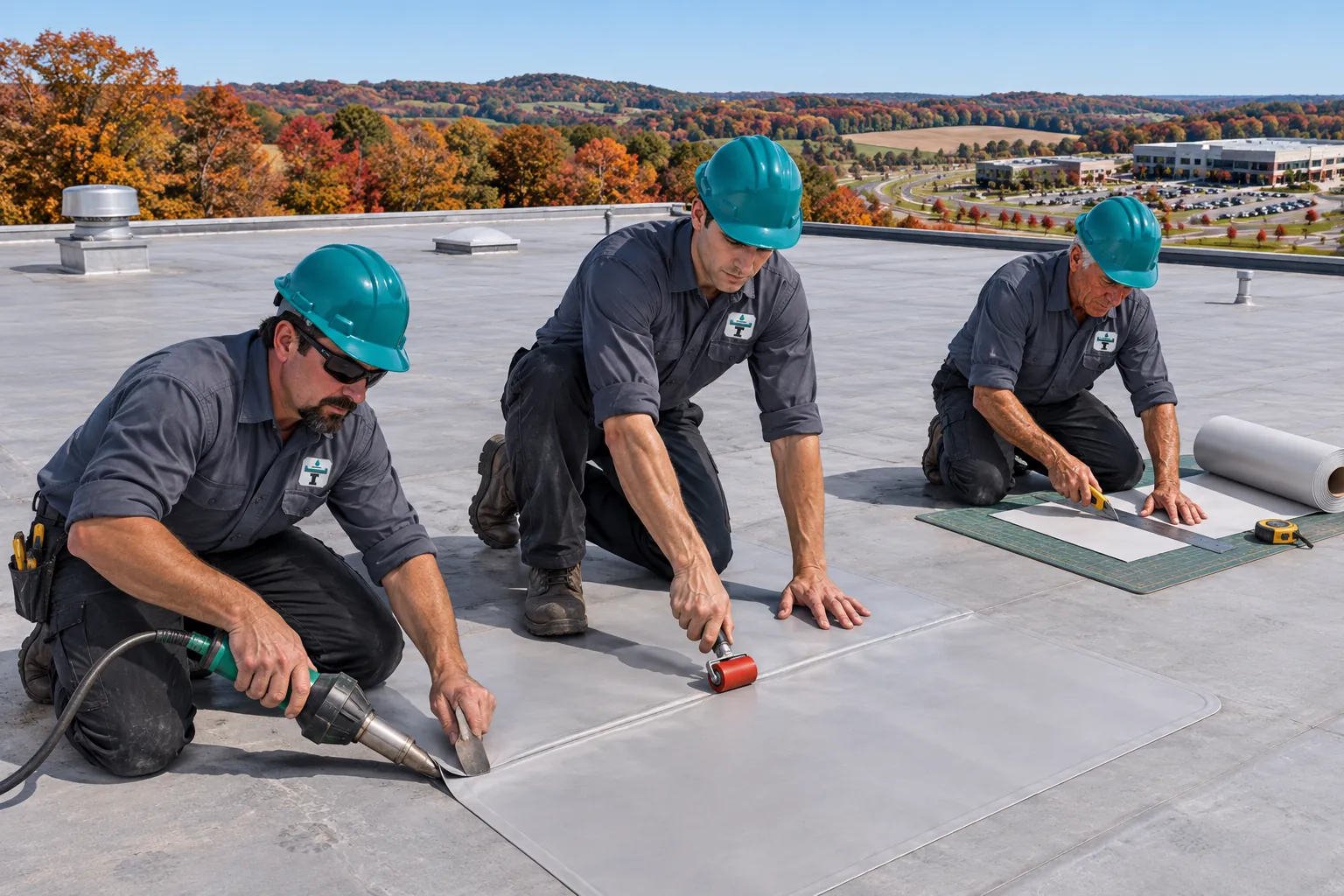
Low-slope additions over offices often carry TPO or EPDM, and their seams fail on a different schedule than the panels next door.
Flat roof repairDrips that move with the wind direction get traced from inside first, which keeps new screws out of panels that never leaked.
Commercial roof leak repairPlant buildings with metal roofs add exhaust fans, skylight rows, and lockout rules to the repair plan.
Industrial roof repairSmall gaps at fasteners, laps, and trim cause most leaks. Daily expansion backs screws out, sun cracks washers, dirty end laps hold water, wind loosens ridge caps and closures, skylight panels crack at their screws, and gutters rust at the seams.
Panels rarely fail first, so repairs begin with these parts and reach the panel field only when rust has spread.
Loose screws are pulled and replaced with oversized or longer screws and new washers so they grip fresh metal. Tight holes keep their screws with new washers, stripped holes step up a size, screws that missed the purlin get a stitch screw or sealed patch, and over-driven screws with crushed washers are swapped out.
How far the rust has gone. Surface rust is brushed, primed, and sealed at the laps, and pinholes get a metal or fabric patch. Once holes run across a panel or rust reaches the purlin bearing, the panel is replaced with one of the same profile and gauge.
Old sealant and rust are cleaned out of the lap, then butyl tape goes in and new stitch screws pull the joint tight. On low-slope metal roofs, where water moves slowly across the lap, backup plates at end laps keep the joint closed between purlins.
Joints are resealed, rusted sections replaced, and loose pieces refastened so water stays on its path. Hangers are reset to pitch gutters toward downspouts, ridge caps get new foam closures, rake and eave trim is screwed down along loose edges, and downspouts are cleared and strapped back to the wall.
Look at where the water appears. Droplets spread across the underside of the panels after a cold night point to condensation, while drips that line up with a purlin, lap, or skylight during rain point to a leak. A walk on the roof above the wet spot settles it.
Tell us which wall the drip is near and whether it shows up with wind, rain, or cold mornings. We will inspect the panels and send a free estimate.
Want a call back about your roof?
Or call us now: +1 (513) 775-5303